Visions of Pacifica

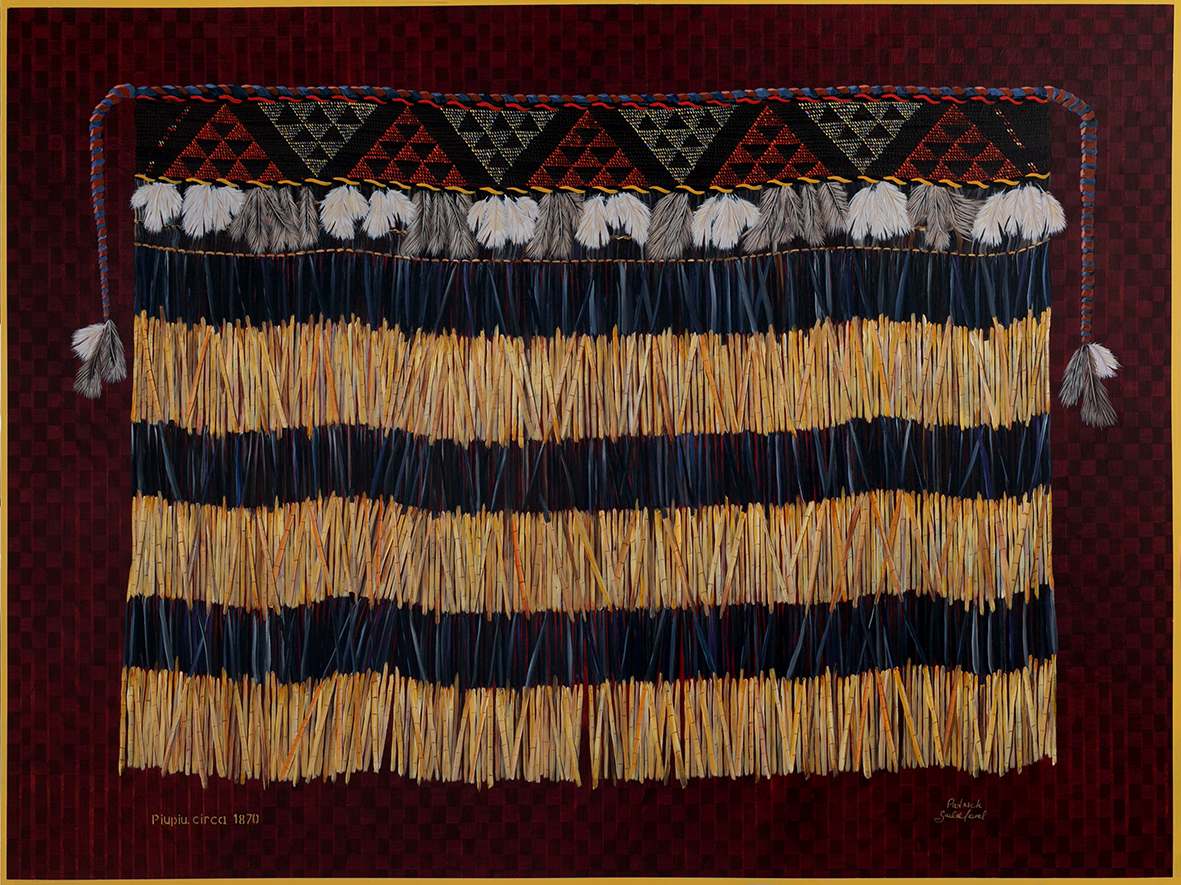
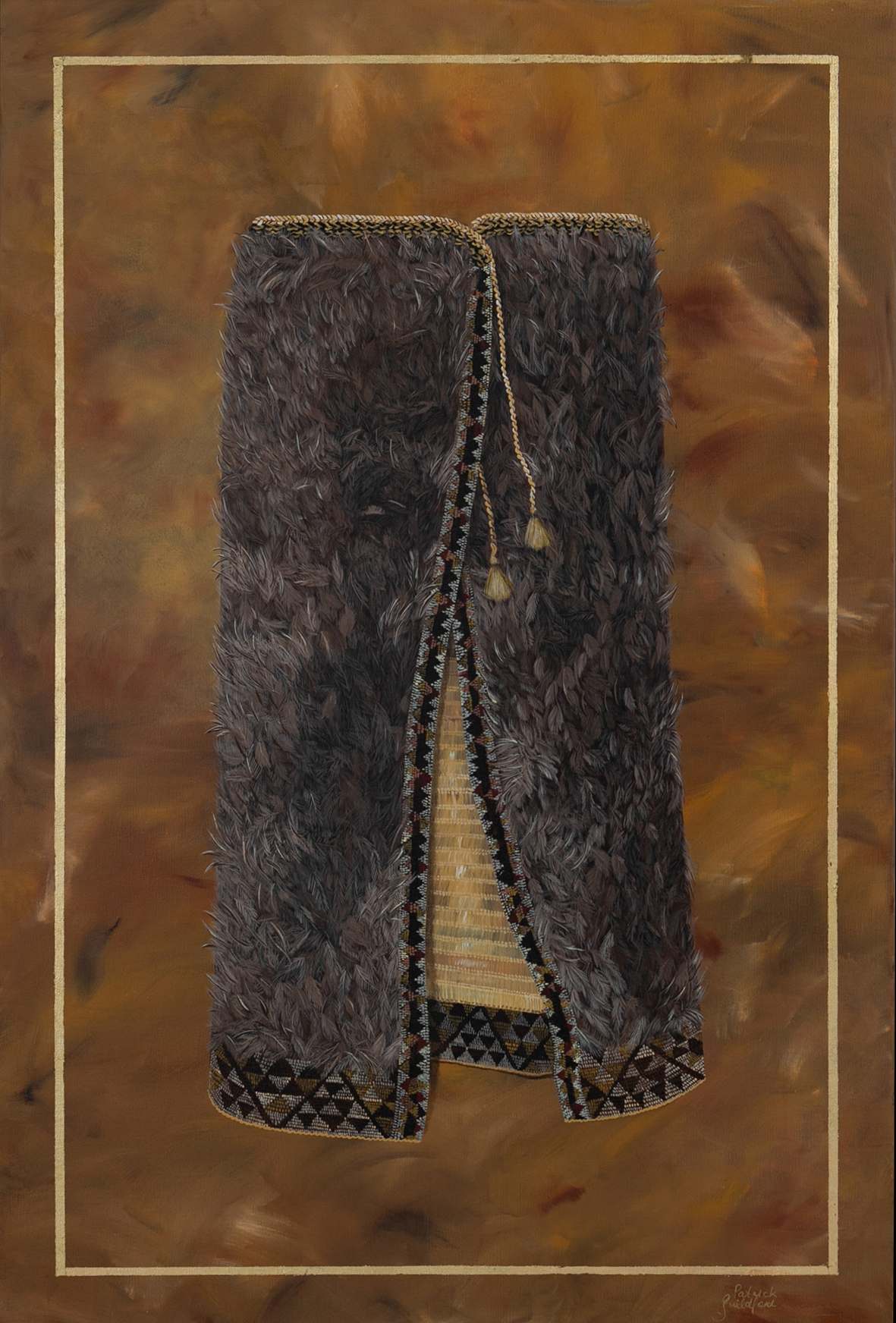
Piupiu
Acrylic on Linen. 1215 x 91cm. #2024-19
Piupiu (Skirt). Circa 1860
A common style of waist garment made from cylindrical strands of harakeke (NZ flax) with parts dyed black and muka (flax fibre) also dyed black.
The band of taniko (geometric design weaving) and the feathers at the top are not a common inclusions on a piupiu. This band of triangular shaped taniko pattern is known as Aronui translating as “knowledge of the natural world” and relates to the pursuit of knowledge of the physical world. The feathers are from the brown kiwi and Kereru (NZ pigeon)
Piupiu (Skirt). Circa 1860
A common style of waist garment made from cylindrical strands of harakeke (NZ flax) with parts dyed black and muka (flax fibre) also dyed black.
The band of taniko (geometric design weaving) and the feathers at the top are not a common inclusions on a piupiu. This band of triangular shaped taniko pattern is known as Aronui translating as “knowledge of the natural world” and relates to the pursuit of knowledge of the physical world. The feathers are from the brown kiwi and Kereru (NZ pigeon)
Guide Maggie
Acrylic on Canvas 92 x 61cm. 2020
This cloak was owned by Makereti Papakura, known as Guide Maggie at the Whakarewarewa geothermal village in Rotorua where in 1901 she escorted the Duke and Duchess of Cornwall (Later King George V and Queen Mary).
She later went to the UK, married an Englishman Richard Staples-Brown and attended Oxford University where she wrote her thesis on Old Time Maori which was later published as a book.
This cloak was owned by Makereti Papakura, known as Guide Maggie at the Whakarewarewa geothermal village in Rotorua where in 1901 she escorted the Duke and Duchess of Cornwall (Later King George V and Queen Mary).
She later went to the UK, married an Englishman Richard Staples-Brown and attended Oxford University where she wrote her thesis on Old Time Maori which was later published as a book.
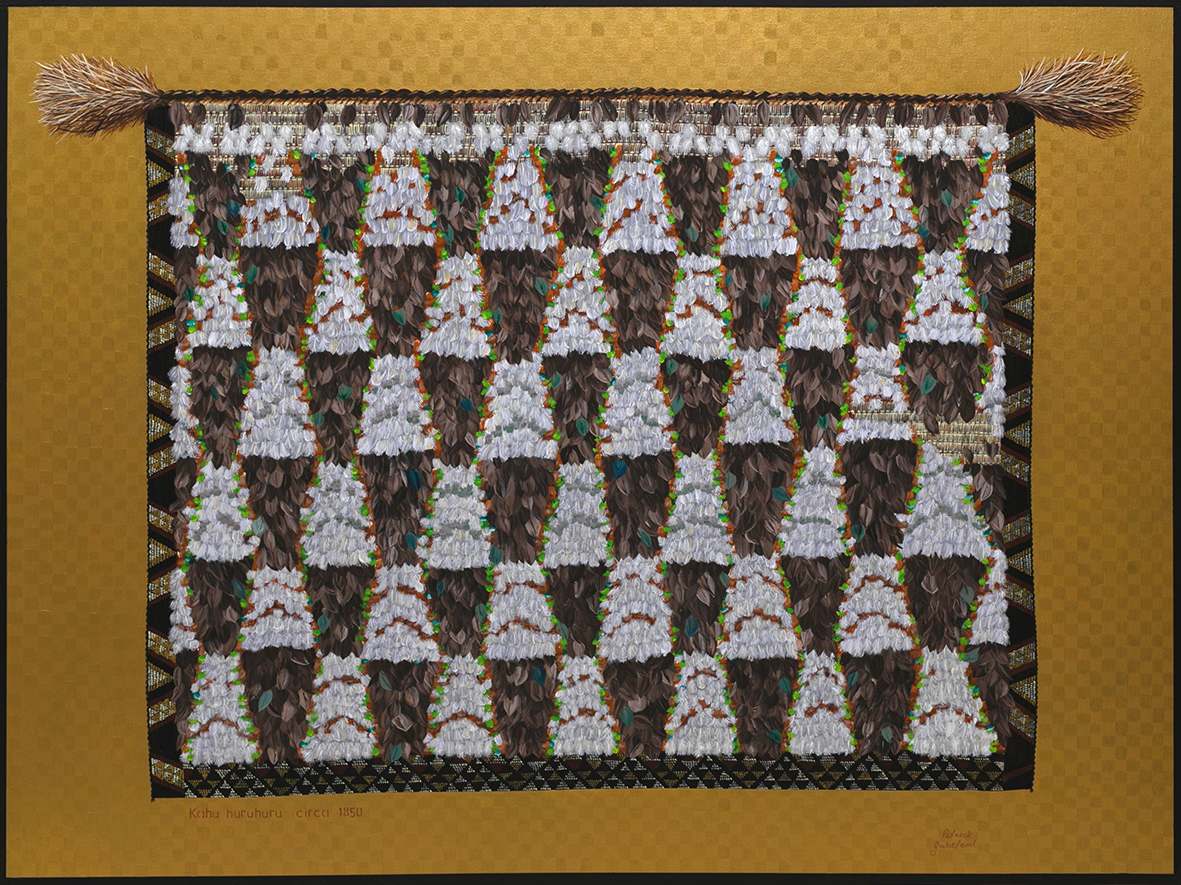
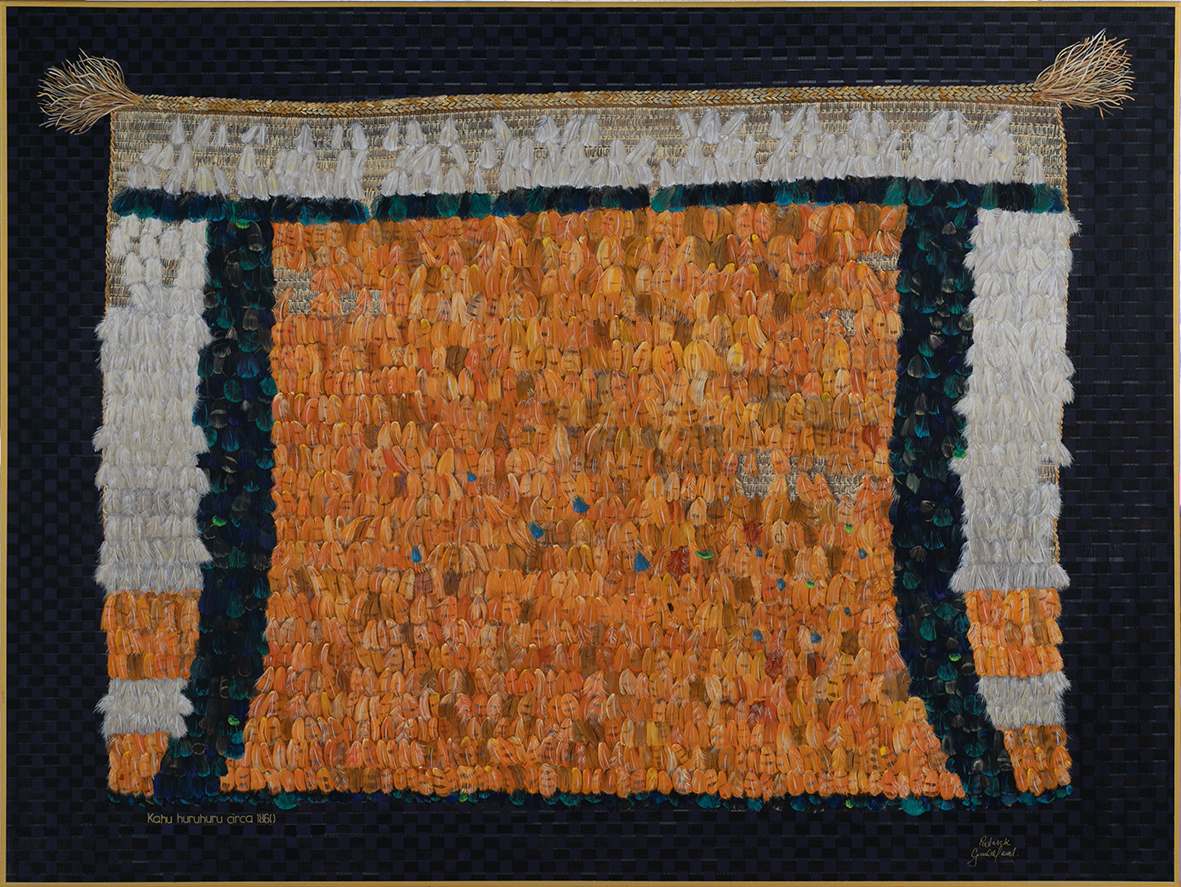
Kahu Huruhuru
Acrylic on Linen. 122 x 91cm. 2024.
This Kahu Huruhuru (feather cloak) was made around 1860.
The weaver is unknown. The cloak size is as painted. The foundation of the cloak is muka (flax fibre) weaved with the feathers weaved into the muka. Eight different birds feathers were used:
White and green kereru feathers, bluish-black tui feathers Blue and black Pukeko feathers, Orange and rusty-red Kaka feathers Light green kakariki feathers and a variety of peacock, ruru(Morepork) and blue/brown male pheasant feathers. This is a startling cloak and would have been worn with pride.
This Kahu Huruhuru (feather cloak) was made around 1860.
The weaver is unknown. The cloak size is as painted. The foundation of the cloak is muka (flax fibre) weaved with the feathers weaved into the muka. Eight different birds feathers were used:
White and green kereru feathers, bluish-black tui feathers Blue and black Pukeko feathers, Orange and rusty-red Kaka feathers Light green kakariki feathers and a variety of peacock, ruru(Morepork) and blue/brown male pheasant feathers. This is a startling cloak and would have been worn with pride.
Royal Kahu Kiwi
Acrylic on Linen. 91.5 x 61cm. 17/11/23
Kahu Kiwi (kiwi feather cloak) were used as much for enhancement as for practical purposes. They were worn at significant gatherings, e.g. funerals, marriages, as chieftainship or highbirth.
This Kahu Kiwi was given to the Dominion Museum Wellington in 1013 by Alexander Turnbull. The cloak size is 1190 x 1530cm and is made from brown kiwi and albino brown kiwi feathers.
Kahu Kiwi (kiwi feather cloak) were used as much for enhancement as for practical purposes. They were worn at significant gatherings, e.g. funerals, marriages, as chieftainship or highbirth.
This Kahu Kiwi was given to the Dominion Museum Wellington in 1013 by Alexander Turnbull. The cloak size is 1190 x 1530cm and is made from brown kiwi and albino brown kiwi feathers.
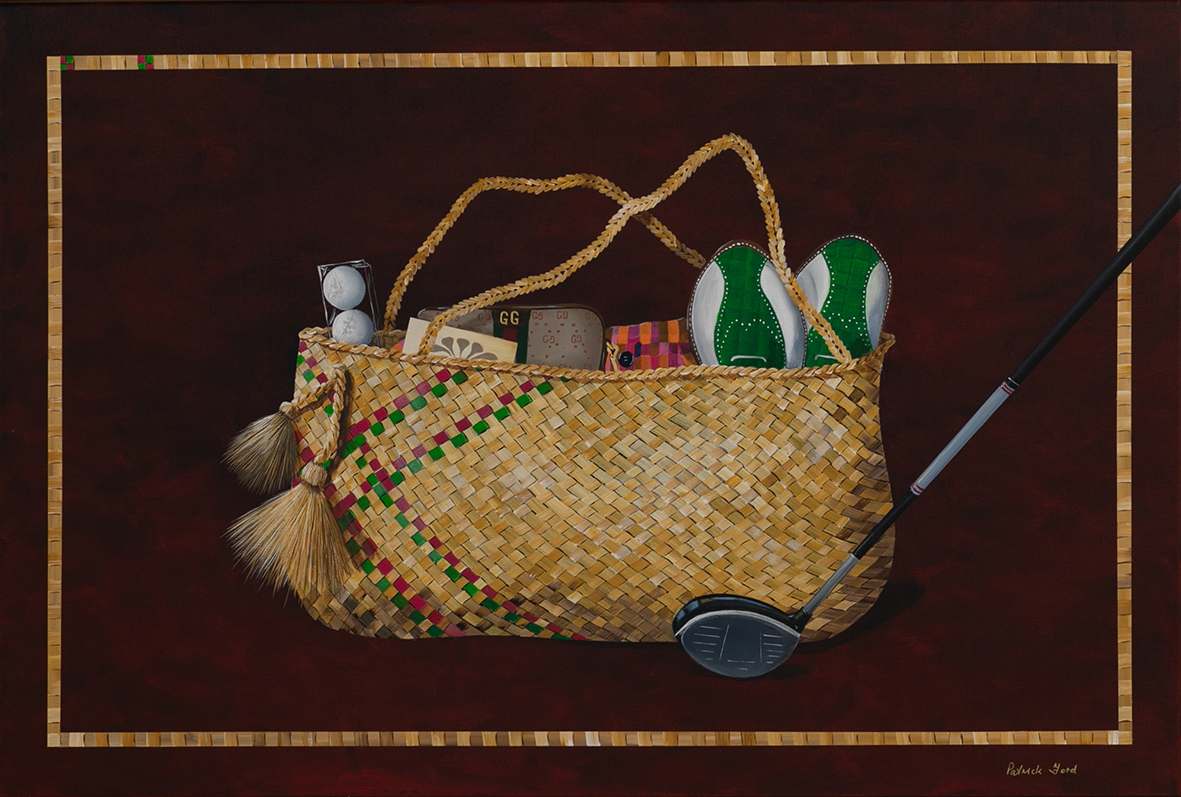
Ladies Golf Bag
Acrylic on Linen. 91 x 61cm
A busy day at the club.
A busy day at the club.
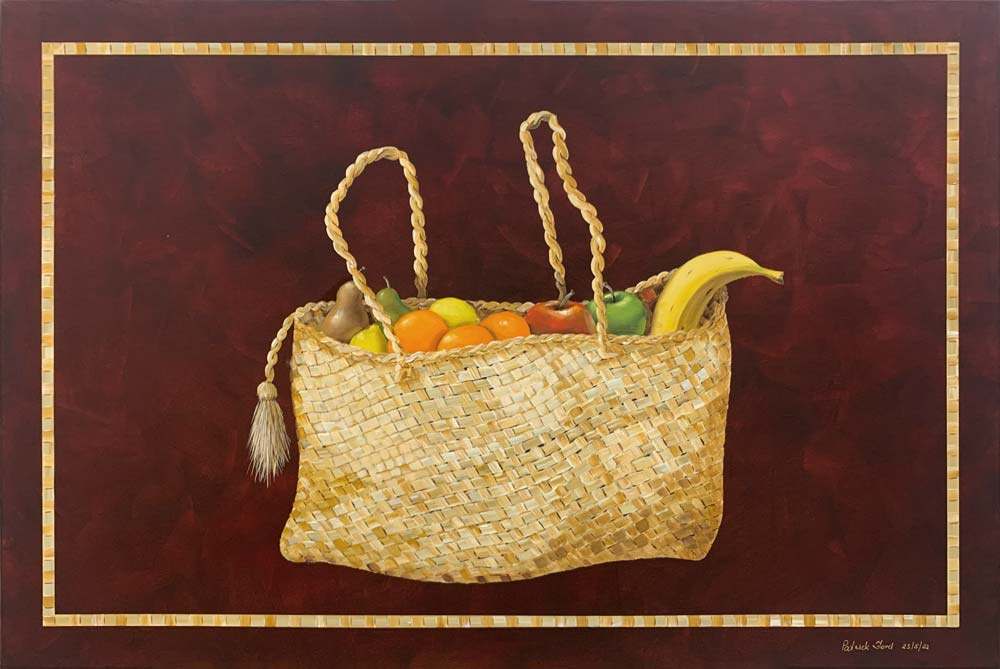
The Fruit Basket
Acrylic on Linen. 910 x 610cm. 2023
The Kete is a popular bag made by the Māori from the flax plant. This dates back centuries and is still used today.
The Kete is a popular bag made by the Māori from the flax plant. This dates back centuries and is still used today.
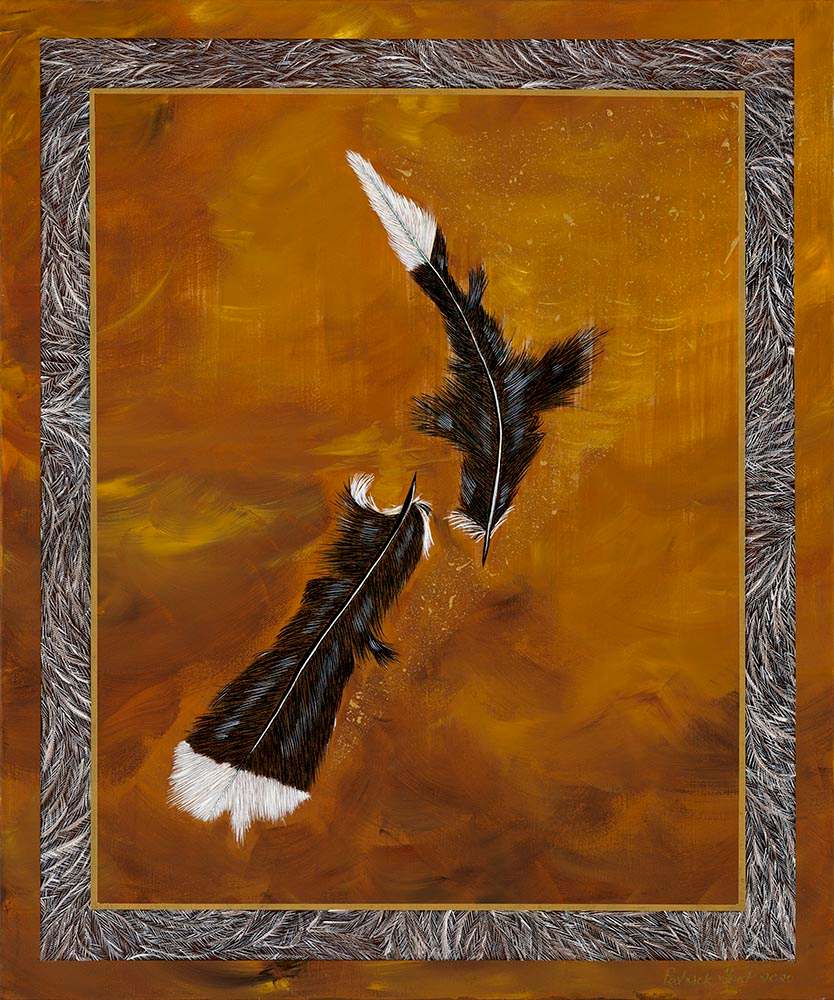
Feathers
Acrylic on canvas. 500 x 600cm. 24/7/20
From the book of myths……
Many, many years ago, these two feathers drifted onto a sand bank in the South Pacific Ocean. Over centuries the wind and sea deposited sand on and around these feathers and slowly built up the size of the sand bank. Seeds od trees and other plants were wept onto the area and over time it was covered with tress and grasses. Their leaves fell and built up a very fertile land consisting of two major islands. Time saw earthquakes which hurled mounds into mountains and created beautiful lakes. Ancient birds and animals easily survived this tranquil land as man had not yet found these southern lands.
When man did venture down to these parts and discovered these islands they eventually called them New Zealand. This is the old-time Huia feathers that started it all surrounded by the ancient feathers of the kiwi.
From the book of myths……
Many, many years ago, these two feathers drifted onto a sand bank in the South Pacific Ocean. Over centuries the wind and sea deposited sand on and around these feathers and slowly built up the size of the sand bank. Seeds od trees and other plants were wept onto the area and over time it was covered with tress and grasses. Their leaves fell and built up a very fertile land consisting of two major islands. Time saw earthquakes which hurled mounds into mountains and created beautiful lakes. Ancient birds and animals easily survived this tranquil land as man had not yet found these southern lands.
When man did venture down to these parts and discovered these islands they eventually called them New Zealand. This is the old-time Huia feathers that started it all surrounded by the ancient feathers of the kiwi.
Celebration Bag
Acrylic on Linen. 76 x 76cm
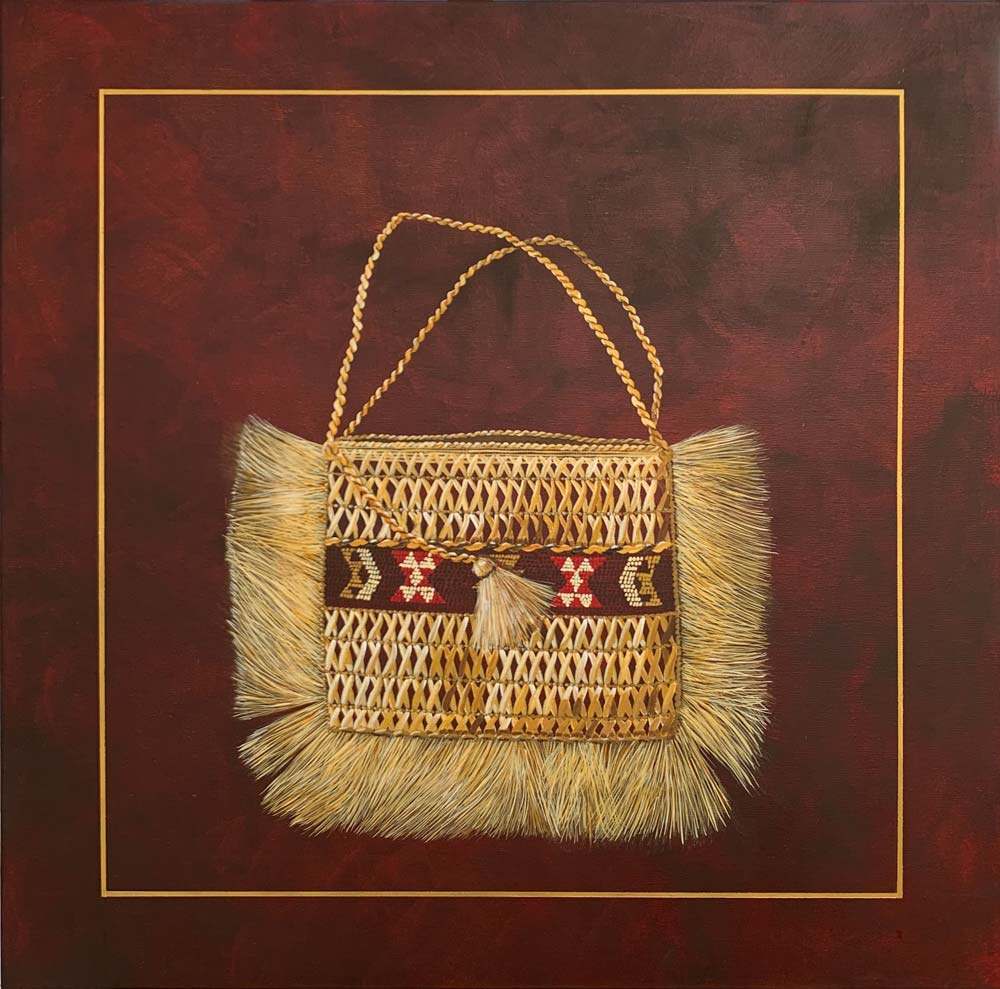
A bag made from flax fibre for celebration occasions. New Zealand, Circa 1830’s
A bag made from flax fibre for celebration occasions. New Zealand, Circa 1830’s